Loan Programs ·
MH Advantage: A Mortgage Option for Manufactured Homes

Mack Humphrey, CMPS
Certified Mortgage Planning Specialist · NMLS #1110618
A manufactured home can offer a different path to ownership around the Denver area. But the financing depends on much more than the asking price. How the home was built, how it is attached to the land, and how ownership is recorded can all affect your mortgage options.
One program worth understanding is Fannie Mae’s MH Advantage. It allows participating lenders to offer conventional mortgages on certain manufactured homes built with features more commonly found in site-built housing.
I’m Mack Humphrey, CMPS, with Team Humphrey at First Coast Mortgage Alliance. When I help buyers compare housing options, I want them to understand both the opportunity and the limits. A lower advertised home price is only useful if the complete property fits your budget—and your financing.
What Makes MH Advantage Different?
MH Advantage is not a separate government loan or a grant. It is a conventional mortgage option for manufactured homes that meet specific requirements. Fannie Mae establishes the program guidelines; participating lenders originate the loans.
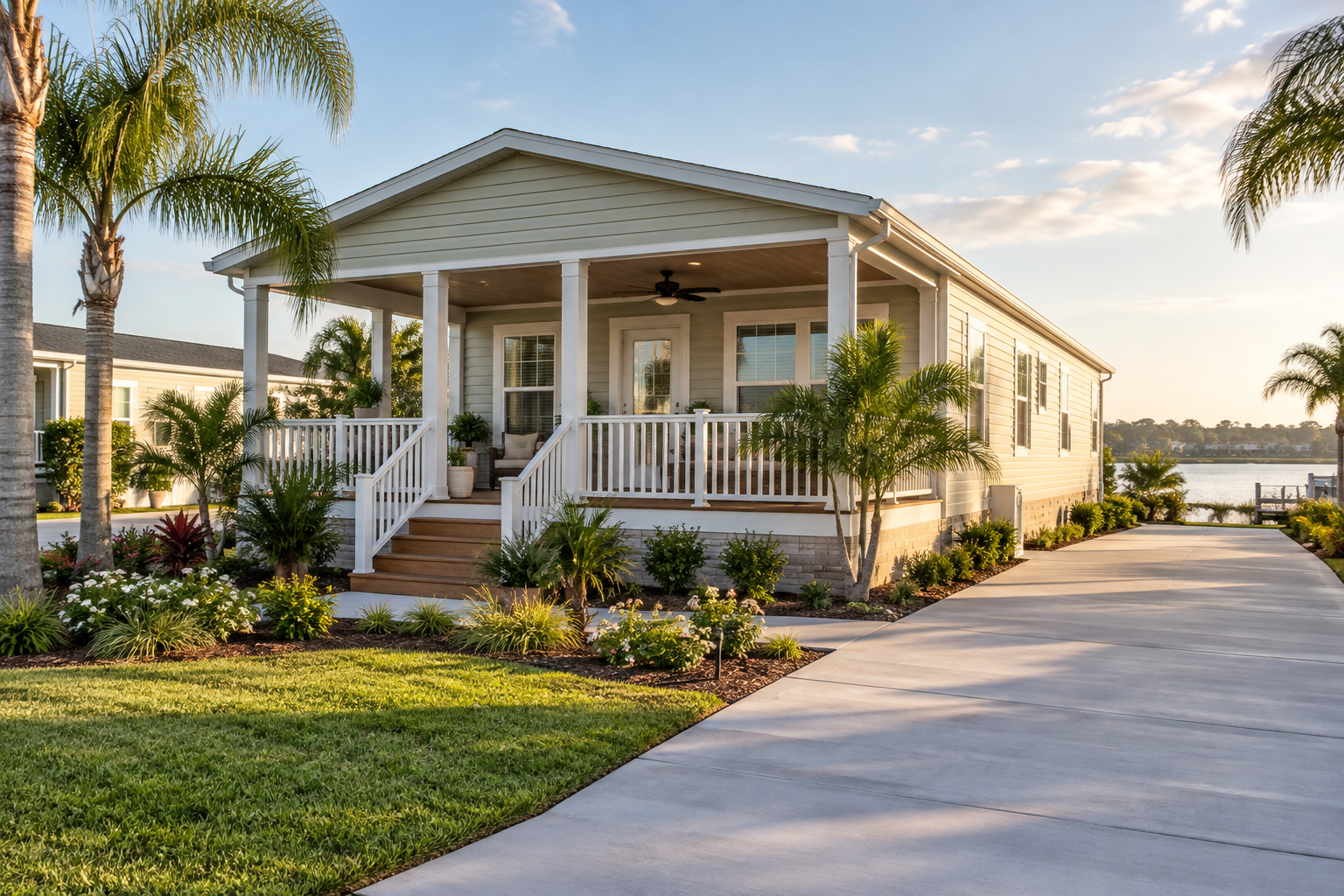
Eligible homes have certain design, construction, and energy-efficiency features. Depending on the manufacturer’s approved design, those can include features such as distinctive rooflines, durable exterior materials, and a garage or carport.
The goal is to identify manufactured homes with characteristics similar to site-built homes. Eligible properties may receive financing terms that are more favorable than those available for standard manufactured housing, including a lower minimum down payment in qualifying situations.
But not every manufactured home qualifies, even if it looks beautiful, has been remodeled, or sits on an attractive lot.
Participating manufacturers identify qualifying homes with an MH Advantage sticker. That sticker is an important starting point, but it does not replace the lender’s review of the home, site, title, appraisal, and borrower qualifications.
Manufactured, Modular, and Personal Property Are Different
Buyers often use “manufactured” and “modular” interchangeably. Mortgage guidelines do not.
A manufactured home is built to federal HUD construction and safety standards. A modular home is generally built to the applicable state or local building codes, much like a site-built home. Modular homes do not need MH Advantage eligibility to be considered under the conventional rules that apply to them.
There is another distinction: whether the home is legally treated as real estate or personal property.
For the MH Advantage purchase scenario I’m discussing here, you are buying the eligible home and its land together. The home must be permanently installed, meet applicable foundation requirements, and be legally classified as real property securing the mortgage.
That is different from purchasing only the home in a community where you rent the lot. A home-only loan, often called a chattel loan, is a different financing product.
Before you pay a deposit, ask:
- Does the sale include the land?
- Is the home already legally classified as real estate?
- Are there separate home title documents that need to be addressed?
- Does the permanent installation meet the lender’s requirements?
Colorado title and recording requirements deserve careful attention. Your lender and title company should identify the documentation needed. A qualified real estate attorney can help with legal questions about ownership or land agreements.
How to Confirm the Home and Site Qualify
I would start with the property’s records, not the listing description.
A listing that says “manufactured home eligible for conventional financing” does not necessarily mean it qualifies for MH Advantage. Standard manufactured-home financing and MH Advantage are not the same thing.
Ask the seller or dealer for the manufacturer, model information, and documentation of MH Advantage eligibility. The lender and appraiser will need to verify the required identifiers and property characteristics.
The MH Advantage sticker is also different from the HUD certification labels and the home’s data plate. Those records serve different purposes, so one should not be treated as a substitute for another.
The site matters, too. Program requirements address features such as the driveway and connecting sidewalks. A qualifying home placed on an unfinished lot does not automatically become a qualifying completed property.
Other review items can include:
- Permanent foundation and installation documentation.
- Utility connections and legal access.
- Zoning and permitted residential use.
- Any additions or alterations affecting eligibility.
- The home’s installation history, including any prior relocation.
MH Advantage is not limited only to newly built homes. An existing home may qualify if its eligibility can be documented and all current requirements are met. For either a new purchase or resale, I would verify the details before assuming the program is available.
What the Mortgage Review Actually Covers
An eligible home does not automatically mean an eligible borrower.
The lender still reviews credit, income, employment, debts, available funds, and the proposed housing payment. Your required down payment and other terms depend on the full loan scenario and current program rules. Mortgage insurance may also be required.
Not every lender offers MH Advantage, and participating lenders may apply additional requirements. That is why I recommend checking availability early rather than treating a dealer’s financing estimate as a commitment.
The appraisal is another important step. The appraiser must evaluate both the property’s market value and its relevant characteristics. MH Advantage has specific appraisal guidance, including how comparable sales are selected when similar eligible homes are scarce.
The cost to buy and install the home is not a promise of appraised value. If the appraisal does not support the agreed price, you may need to renegotiate, contribute additional eligible funds, or reconsider the purchase.
For a new home that has not yet been installed, ask how the transaction will be structured. Delivery, installation, inspections, and final completion can create funding needs before a permanent mortgage is ready to close. Do not assume MH Advantage itself provides construction-stage payments to the dealer.
Compare the Finished Property, Not the Display Price
A model-home price can be appealing while leaving out major pieces of the actual purchase.
For a new manufactured home, request a written budget that clearly identifies what is included and excluded. Depending on the transaction, costs may include:
- The land and any required site preparation.
- Delivery, foundation work, and installation.
- Utility connections, permits, and inspections.
- Driveway, sidewalks, and required site improvements.
- Closing costs, prepaid expenses, and insurance.
Around Aurora and the broader Denver area, zoning, available lots, utility access, and local installation requirements can change the economics considerably.
I also want buyers to obtain an insurance quote early and understand any homeowners association restrictions. Those expenses and rules remain part of ownership even when the mortgage fits comfortably.
My approach is to compare the completed manufactured-home purchase with realistic alternatives: a smaller site-built home, a different neighborhood, or an existing eligible manufactured home. MH Advantage can be a useful option, but the right choice is the property and financing combination that works for your household—not simply the lowest advertised price.
Let's Talk
Considering a manufactured home in the Denver area? Call (720) 771-1308 or reach out to me, Mack Humphrey, for a no-pressure conversation about the property, available financing, and questions to ask before committing.
Mack Humphrey, CMPS | NMLS #1110618 | Team Humphrey at First Coast Mortgage Alliance. Based locally in Aurora, Colorado; corporate office in Jacksonville, Florida.
Talk to Mack
Have questions about your own situation? Let's run your numbers together, with no pressure and no obligation.